
#1 Marketing Management: Analysis, Planning, and Control (1967)·The seminal 1967 framework for strategic marketing analysis, planning, and control.·Today's Insight:Segmentation, targeting, and positioning — STP — is the strategic core of every marketing plan.#2 Social Marketing: Creating Social Change (1971)·How marketing principles can drive social change and improve public behavior (1971).·Today's Insight:Change starts with understanding what your audience values — not what you want them to do.#3 Marketing Decision Making: A Model-Building Approach (1971)·A 1971 contribution to Philip Kotler's body of marketing thought.·Today's Insight:Segmentation, targeting, and positioning — STP — is the strategic core of every marketing plan.#4 Simulation in Social and Administrative Science: Overviews and Case-Studies (1972)·A 1972 contribution to Philip Kotler's body of marketing thought.·Today's Insight:A decision is only as good as the assumptions you were willing to test.#5 Strategic Marketing for Nonprofit Organizations (1975)·Strategic marketing applied to mission-driven organizations (1975).·Today's Insight:Donors, volunteers, and beneficiaries are three distinct markets, each needing its own value proposition.#6 Principles of Marketing (1980)·Kotler's classic introductory text to the principles of modern marketing (1980).·Today's Insight:Segmentation, targeting, and positioning — STP — is the strategic core of every marketing plan.#7 Marketing Models (1983)·A 1983 contribution to Philip Kotler's body of marketing thought.·Today's Insight:Segmentation, targeting, and positioning — STP — is the strategic core of every marketing plan.#8 Marketing Management and Strategy: Selected Readings (1980)·The seminal 1980 framework for strategic marketing analysis, planning, and control.·Today's Insight:Segmentation, targeting, and positioning — STP — is the strategic core of every marketing plan.#9 Marketing Essentials (1984)·A 1984 contribution to Philip Kotler's body of marketing thought.·Today's Insight:Segmentation, targeting, and positioning — STP — is the strategic core of every marketing plan.#10 Professional Services Marketing (1984)·A 1984 contribution to Philip Kotler's body of marketing thought.·Today's Insight:In professional services, trust is the brand; reputation compounds faster than any ad spend.#11 Strategic Marketing for Educational Institutions (1985)·Strategic marketing for colleges, universities, and learning institutions (1985).·Today's Insight:Donors, volunteers, and beneficiaries are three distinct markets, each needing its own value proposition.#12 The New Competition: What the Z Theory Doesn't Tell You About Marketing (1985)·A 1985 contribution to Philip Kotler's body of marketing thought.·Today's Insight:Innovation begins by breaking a single assumption inside an existing category.#13 Marketing for Health Care Organizations (1987)·Bringing customer-centered marketing to health care institutions (1987).·Today's Insight:Donors, volunteers, and beneficiaries are three distinct markets, each needing its own value proposition.#14 High Visibility: The Professional's Guide to Becoming a Celebrity (1987)·A 1987 contribution to Philip Kotler's body of marketing thought.·Today's Insight:Visibility without substance fades; substance without visibility is wasted.#15 Social Marketing: Strategies for Changing Public Behavior (1989)·How marketing principles can drive social change and improve public behavior (1989).·Today's Insight:Change starts with understanding what your audience values — not what you want them to do.#16 Marketing for Congregations: Choosing to Serve People More Effectively (1992)·A 1992 contribution to Philip Kotler's body of marketing thought.·Today's Insight:Donors, volunteers, and beneficiaries are three distinct markets, each needing its own value proposition.#17 Marketing Places: Attracting Investment, Industry, and Tourism (1993)·Marketing strategy for hospitality and tourism organizations (1993).·Today's Insight:A city's brand is the sum of the stories outsiders tell about it.#18 Marketing for Hospitality and Tourism (1996)·Marketing strategy for hospitality and tourism organizations (1996).·Today's Insight:Donors, volunteers, and beneficiaries are three distinct markets, each needing its own value proposition.#19 Principles of Marketing (European Edition) (1996)·Kotler's classic introductory text to the principles of modern marketing (1996).·Today's Insight:A city's brand is the sum of the stories outsiders tell about it.#20 Marketing Management: An Asian Perspective (1996)·The seminal 1996 framework for strategic marketing analysis, planning, and control.·Today's Insight:A city's brand is the sum of the stories outsiders tell about it.#21 Marketing Nations: A Strategic Approach to Building National Wealth (1997)·A 1997 contribution to Philip Kotler's body of marketing thought.·Today's Insight:A city's brand is the sum of the stories outsiders tell about it.#22 Standing Room Only: Strategies for Marketing the Performing Arts (1997)·Marketing strategy for the entertainment and cultural industries (1997).·Today's Insight:Word of mouth is the true distribution channel for art and entertainment.#23 Museum Strategy and Marketing (1998)·Mission, audience, and revenue strategy for cultural institutions (1998).·Today's Insight:Donors, volunteers, and beneficiaries are three distinct markets, each needing its own value proposition.#24 Kotler on Marketing: How to Create, Win, and Dominate Markets (1999)·Kotler's distilled answers to the questions every marketer asks (1999).·Today's Insight:There is only one boss — the customer — and they can fire everyone by spending elsewhere.#25 Marketing Management: An Asian Perspective (1999 Edition) (1999)·The seminal 1999 framework for strategic marketing analysis, planning, and control.·Today's Insight:A city's brand is the sum of the stories outsiders tell about it.#26 Marketing Places in Europe (1999)·How cities, regions, and nations market themselves to attract investment and visitors (1999).·Today's Insight:A city's brand is the sum of the stories outsiders tell about it.#27 Repositioning Asia: From Bubble to Sustainable Economy (2000)·Marketing strategy and management adapted for Asian markets (2000).·Today's Insight:A city's brand is the sum of the stories outsiders tell about it.#28 Asian Place Marketing (2001)·Marketing strategy and management adapted for Asian markets (2001).·Today's Insight:A city's brand is the sum of the stories outsiders tell about it.#29 Marketing Management Framework (2001)·The seminal 2001 framework for strategic marketing analysis, planning, and control.·Today's Insight:Segmentation, targeting, and positioning — STP — is the strategic core of every marketing plan.#30 Marketing Movies: A New Approach to Profits, Growth, and Renewal (2002)·Marketing strategy for the entertainment and cultural industries (2002).·Today's Insight:Word of mouth is the true distribution channel for art and entertainment.#31 Social Marketing: Improving the Quality of Life (2002)·How marketing principles can drive social change and improve public behavior (2002).·Today's Insight:Change starts with understanding what your audience values — not what you want them to do.#32 Marketing Insights from A to Z: 80 Concepts Every Manager Needs to Know (2003)·A 2003 contribution to Philip Kotler's body of marketing thought.·Today's Insight:There is only one boss — the customer — and they can fire everyone by spending elsewhere.#33 Global Biobranding: Transferring Biotechnology to the Market (2003)·A 2003 contribution to Philip Kotler's body of marketing thought.·Today's Insight:Technology should amplify human judgment, not replace the human at the center of the brand.#34 Rethinking Marketing: Sustainable Marketing in Asia (2003)·Marketing strategy and management adapted for Asian markets (2003).·Today's Insight:A city's brand is the sum of the stories outsiders tell about it.#35 Lateral Marketing: A New Approach to Product, Market, and Marketing Mix Ideas (2003)·A creative, cross-category approach to generating breakthrough ideas (2003).·Today's Insight:Innovation begins by breaking a single assumption inside an existing category.#36 Ten Deadly Marketing Sins: Signs and Solutions (2004)·A 2004 contribution to Philip Kotler's body of marketing thought.·Today's Insight:In crises, cut the budgets that do not produce — never the relationships that do.#37 Attracting Investors: A Marketing Approach to Finding Funds for Your Business (2004)·A 2004 contribution to Philip Kotler's body of marketing thought.·Today's Insight:Capital, like customers, flows toward clarity of value and credibility of management.#38 Marketing Management (6th Edition) (2004)·The seminal 2004 framework for strategic marketing analysis, planning, and control.·Today's Insight:Segmentation, targeting, and positioning — STP — is the strategic core of every marketing plan.#39 Corporate Social Responsibility: Doing the Most Good for Your Company and Your Cause (2005)·How companies do the most good for their business and their cause (2005).·Today's Insight:A cause is most powerful when it sits at the intersection of company strengths and societal need.#40 Questions and Answers on Marketing (2004)·A 2004 contribution to Philip Kotler's body of marketing thought.·Today's Insight:There is only one boss — the customer — and they can fire everyone by spending elsewhere.#41 According to Kotler: The World's Foremost Authority on Marketing Answers All Your Questions (2005)·Kotler's distilled answers to the questions every marketer asks (2005).·Today's Insight:There is only one boss — the customer — and they can fire everyone by spending elsewhere.#42 Principles of Marketing: An Asian Perspective (2005)·Kotler's classic introductory text to the principles of modern marketing (2005).·Today's Insight:A city's brand is the sum of the stories outsiders tell about it.#43 B2B Brand Management (2006)·Building and managing powerful brands in business-to-business markets (2006).·Today's Insight:Capital, like customers, flows toward clarity of value and credibility of management.#44 Marketing Places: Latin America (2006)·How cities, regions, and nations market themselves to attract investment and visitors. Note: the 2006 edition is referenced only in Philip Kotler's official bibliography; the closest available version is the 2002 edition.·Today's Insight:A city's brand is the sum of the stories outsiders tell about it.#45 Reinventing Sports in a Crowded Marketplace (2006)·Marketing strategy for the entertainment and cultural industries (2006).·Today's Insight:Strategy is choosing what not to do as much as what to do.#46 A Roadmap for Improved Performance: Marketing in the Public Sector (2006)·A 2006 contribution to Philip Kotler's body of marketing thought.·Today's Insight:Strategy is choosing what not to do as much as what to do.#47 Marketing: An Introduction; Asian Perspective (2006)·Marketing strategy and management adapted for Asian markets (2006).·Today's Insight:A city's brand is the sum of the stories outsiders tell about it.#48 Marketing Management: Twelfth Canadian Edition (2006)·The seminal 2006 framework for strategic marketing analysis, planning, and control.·Today's Insight:Segmentation, targeting, and positioning — STP — is the strategic core of every marketing plan.#49 Think ASEAN: Rethinking Marketing Toward ASEAN Community (2007)·Marketing strategy and management adapted for Asian markets (2007).·Today's Insight:Strategy is choosing what not to do as much as what to do.#50 Strategic Marketing for Health Care Organizations (2008)·Bringing customer-centered marketing to health care institutions (2008).·Today's Insight:Donors, volunteers, and beneficiaries are three distinct markets, each needing its own value proposition.
First Edition · 2026

Summaries of Kotler's Writings100 book summaries · 1967 — 2026

"Summaries of Kotler's Writings" is a personal, non-commercial project by Abdullrahman Zidan. It offers concise, faithful summaries of 100 books written by Philip Kotler — not the full books themselves. Full copyright of every original work remains with its author and publisher. To purchase the original books, visit the dedicated "Kotler Books" section, which includes direct Amazon purchase links.

Fifty years of marketing wisdom, distilled into 100 short summaries — one for each of Kotler's books — curated by Abdullrahman Zidan with the blessing of Professor Kotler himself.
100
Summaries
59
Years
784
Pages
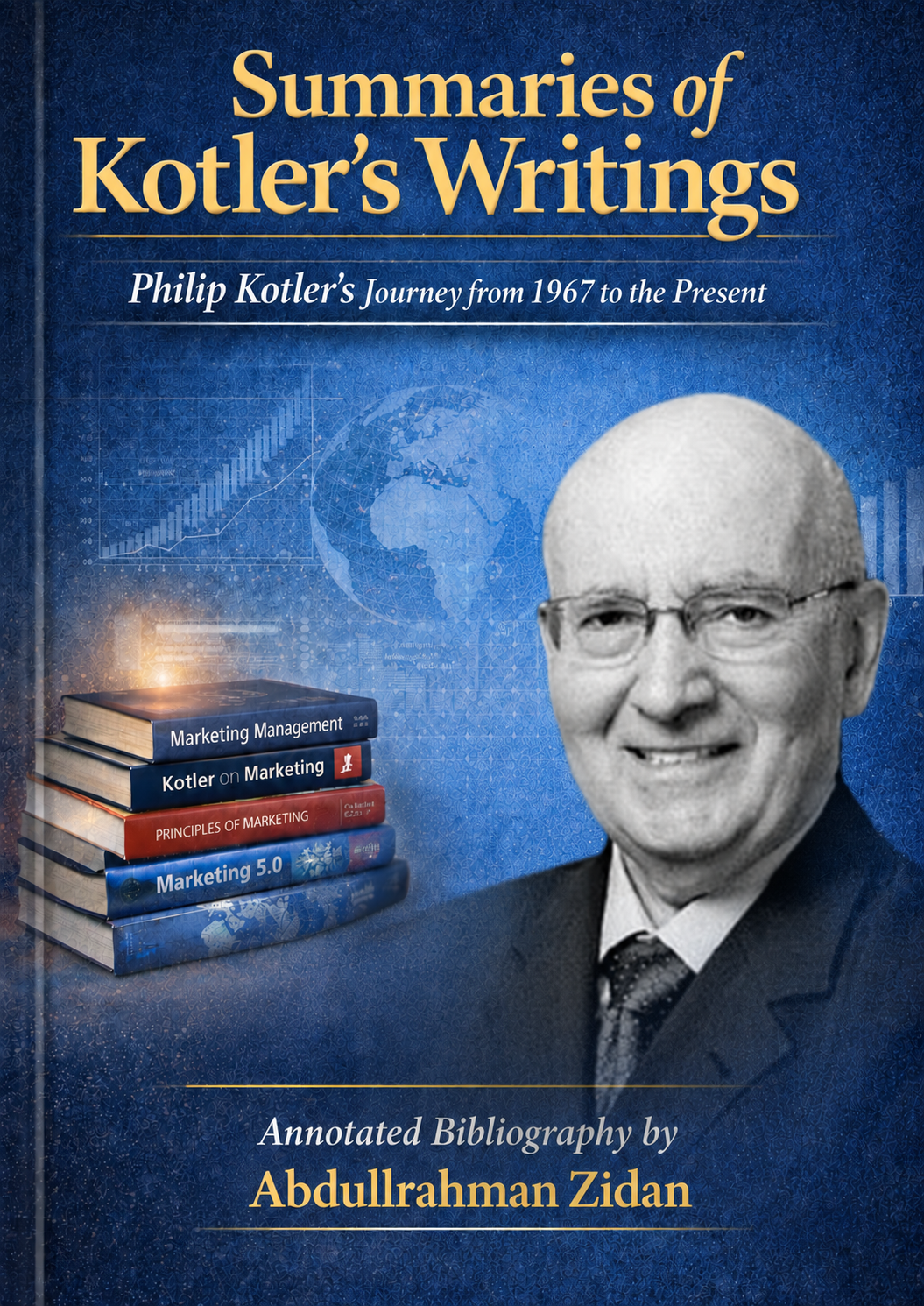
Summaries of Kotler's Writings — book cover

A Word from Philip Kotler

Appreciation from Professor Kotler

"My appreciation of your dedicated work to put together short descriptions of each book."
— Professor Philip Kotler, on reviewing the 100 summaries

About the Author

Philip Kotler — The Father of Modern Marketing

Portrait of Professor Philip Kotler

Philip Kotler is universally regarded as the Father of Modern Marketing. Across nearly six decades, he has authored more than 100 books and shaped the way the world understands markets, organizations, and human behavior.

From his foundational 1967 textbook Marketing Management to the recent Marketing 7.0 in the Age of AI, Kotler's writing has redefined marketing as a discipline of strategy, ethics, and human-centered value creation. His ideas power MBA curricula on every continent and the daily decisions of leaders at the world's most respected brands.

  • S. C. Johnson Distinguished Professor, Kellogg School
  • 100+ books, dozens of editions, 25+ languages
  • Architect of the 4 Ps, STP, and Marketing 1.0 → 7.0
  • Bridges academia, practice, ethics, and society

About the Book

One Library. Fifty Years. Every Idea.

What it is

This website contains 100 professionally prepared summaries of Philip Kotler's books. The summaries help readers quickly understand each book before deciding to purchase it. The full books are not hosted on this website.

Why it exists

To save readers hundreds of hours of research by providing concise, structured summaries that make it easy to identify the books most relevant to their interests and needs.

Why it's unique

It is the only website that brings together summaries of Philip Kotler's complete body of work in one place, allowing readers to explore every book before making a purchasing decision.

What you'll find

Each summary provides a clear overview of the book's main ideas, key concepts, practical insights, major frameworks, and overall value, helping readers decide whether they would like to read the complete book.

Who it's for

Marketing students, professors, professionals, executives, entrepreneurs, consultants, and anyone interested in marketing who wants to understand Kotler's books efficiently before purchasing them.

How it's read

Visitors can browse all summaries online. If they decide they want the complete content, they can purchase the original books through the Kotler Books section.

One of the goals of this website is to allow visitors to explore a concise summary of each book before purchasing it, helping them better understand its relevance, content, and value based on their current needs.

Purpose

Vision & Mission

Vision

To make Philip Kotler's complete body of work easier to discover, so every marketer, student, and leader can quickly identify the original books most worth reading in full.

Mission

To save readers years of research by offering 100 concise summaries — one per Kotler book — that help them decide which original works to purchase and study in depth. The summaries are a companion to Kotler's books, never a replacement.

A Gateway, Not a Substitute

One book that opens the door to one hundred.

This website contains faithful short summaries of 100 books written by Professor Philip Kotler between 1967 and 2026. It is designed as a gateway — a way to meet every idea in the Kotler canon, understand how it fits the larger arc of his thinking, and decide which volumes you want to read in full.

The website hosts summaries only — not the original books. A summary, no matter how careful, can never replace the depth, the case studies, the voice, and the nuance of the original work. Our hope is the opposite: that as you move through these summaries you will discover the titles that speak most directly to your work and your questions — and that you will go on to read Kotler's complete books, in their original form, via the Kotler Books section, for the rest of your career.

Read this collection as a map of the territory. Then pick up the books themselves and walk the territory in full. That is the highest honor we can pay to a body of work that has shaped marketing for more than half a century.

  • 1

    Discover

    Meet all 100 Kotler titles in one place — chronologically, with context.

  • 2

    Decide

    Use each summary to identify the books most relevant to your role and goals.

  • 3

    Go Deeper

    Then read Kotler's original works in full — the summaries are the doorway, not the destination.

Why Read This Book

Six audiences. One canon. Lifelong leverage.

Students

Master 50 years of canonical marketing in weeks of focused reading.

Professors

Anchor lectures with Kotler-aligned summaries, cases, and discussion questions.

Marketers

Apply battle-tested frameworks — from STP to Marketing 7.0 — to today's campaigns.

Sales Leaders

Translate Kotler's strategy lens into pipeline discipline and customer value.

Entrepreneurs

Build a brand, position a product, and find a market — by the playbook.

Executives & Consultants

Cite the source. Speak the language. Lead with rigor.

Annotated Bibliography

Abdullrahman Zidan

Portrait of Abdullrahman Zidan, curator of the collection

Marketing & Sales Solutions Expert

The researcher behind the collection

Abdullrahman Zidan is a marketing and sales consultant, business development specialist, author, and knowledge curator based in Amman, Jordan. He is the creator of this collection — the researcher who reviewed, analyzed, summarized, and organized approximately one hundred of Philip Kotler's books, building a curated collection that spans the entire 1967–2026 arc.

"Abdullrahman has shown remarkable dedication and a deep understanding of marketing and sales. I approve the sharing and promotion of this project."
— Professor Philip Kotler, on Abdullrahman Zidan
  • Marketing & sales consultant
  • Business development specialist
  • Author and knowledge curator
  • Creator of this collection
  • Reviewed by Professor Philip Kotler
  • Personally endorsed by Professor Philip Kotler

A Personal Encounter

Amman, 2012 — when the curator met the master
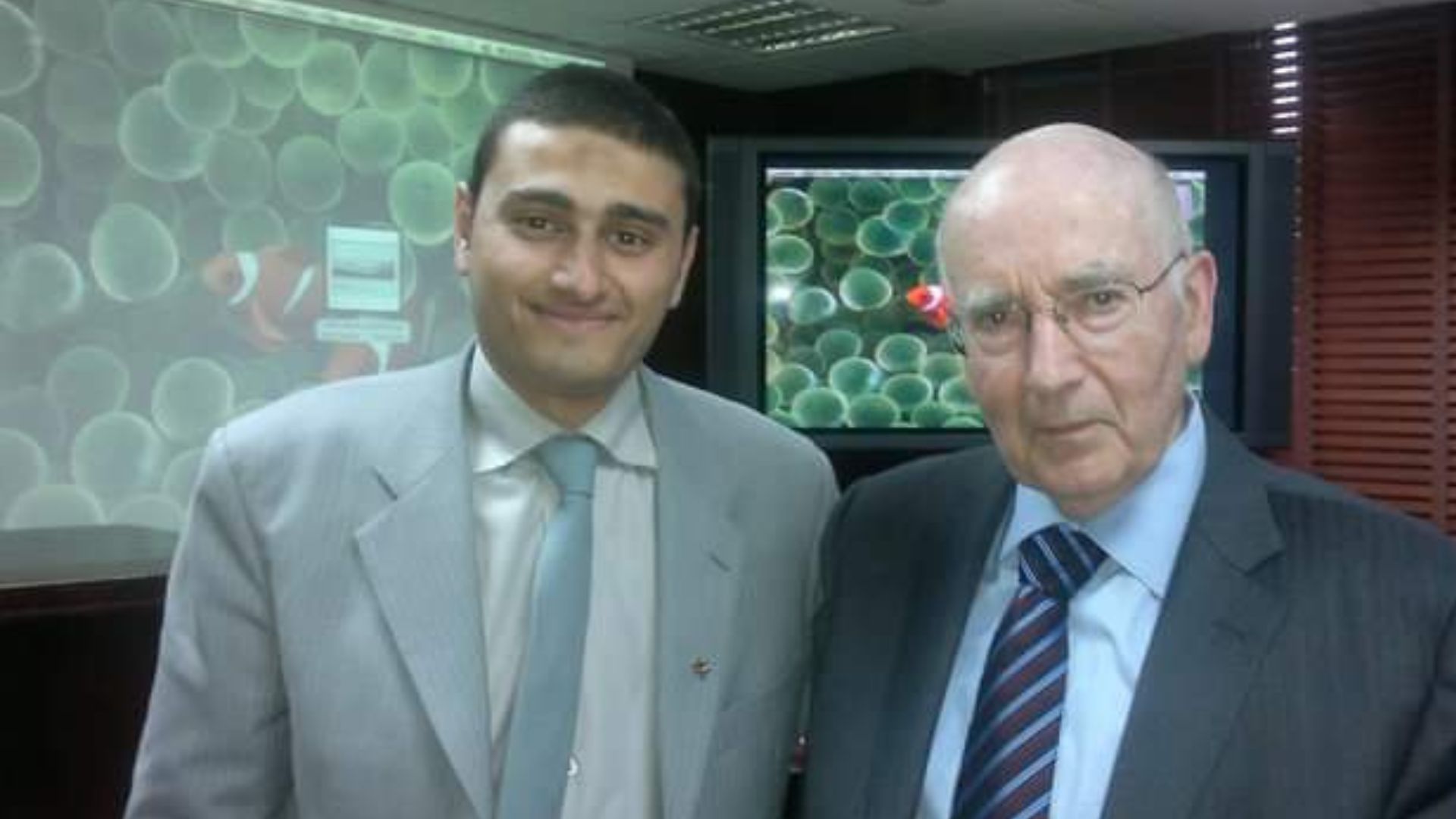
Abdullrahman Zidan with Professor Philip Kotler in Amman, 2012
Abdullrahman Zidan with Professor Philip Kotler — Amman, 2012.
The seed of the collection

In 2012, during one of Professor Kotler's visits to Amman, Jordan, a young Abdullrahman Zidan had the rare opportunity to meet the man whose books had shaped his thinking on marketing and sales.

That brief but defining encounter planted the idea that would, more than a decade later, become this curated collection — a deliberate, book-by-book journey through every work Kotler had ever published, written as a tribute to the discipline he built and the teacher who inspired it.

The conversation in 2012 was short. The work it inspired now spans one hundred chapters and fifty-nine years of marketing thought.

Start exploring the 100 summaries today.

Enter your name and email once to unlock all 100 summaries and decide which original Kotler books to purchase next — in a quiet, distraction-free reader.

Full name & email required · Summaries only — original books sold separately