
Special · Arab Case Studies
Zain Awad
A voice born in quiet, raised by a message
A thirty-year Jordanian artistic career read as a management case: family capital, preparedness meeting opportunity, purpose-driven personal branding, role balancing, self-reinvention and the portfolio career.
Written & researched by Abdulrahman Zidan — Founder of the project “Arab Case Studies to the World.” Written and researched by Abdulrahman Zidan, 2026.

- Born
- 15 February 1978 — outskirts of Amman, Jordan
- Profession
- Singer, musician, composer, TV & festival host
- Education
- BA Music (voice & piano), Jordan Academy of Music, 2000
- Second degree
- BA Physical Education, University of Jordan, 2003
- Albums
- “La Tejdali”, “Ala Wa'di”, and a full children's album
- Family
- Married to Mohannad Al-Bakri; two children; based in Amman
Introduction
Picture a quiet Jordanian home in the 1970s. No shouting, no raised voices — only family warmth and music drifting from the living room every Thursday night. The family hosts the neighbours, listens to well-known singers, and sometimes plays itself.
In one of the rooms a little girl falls asleep to the sound of that gathering. School comes in the morning, so she cannot attend — yet she hears the concert and lives it from a distance.
That girl did not know she would one day sing before His Majesty King Abdullah II, perform at an international tribute in Washington, share a stage in Italy and Jerash with the world-renowned Maestro Riccardo Muti, revive the memory of Warda Al-Jazairia in both Amman and Algiers, and sing in four languages at a TEDx summit.
This is Zain Awad. We tell her story here not as an artistic biography, but as a human and practical roadmap. At every station we stop and ask: what exactly did Zain do here — and what can a student, an employee, a mother, a beginning artist, or even a child listening before bedtime take away from it?
Chapter 01
The home that planted confidence before it planted talent
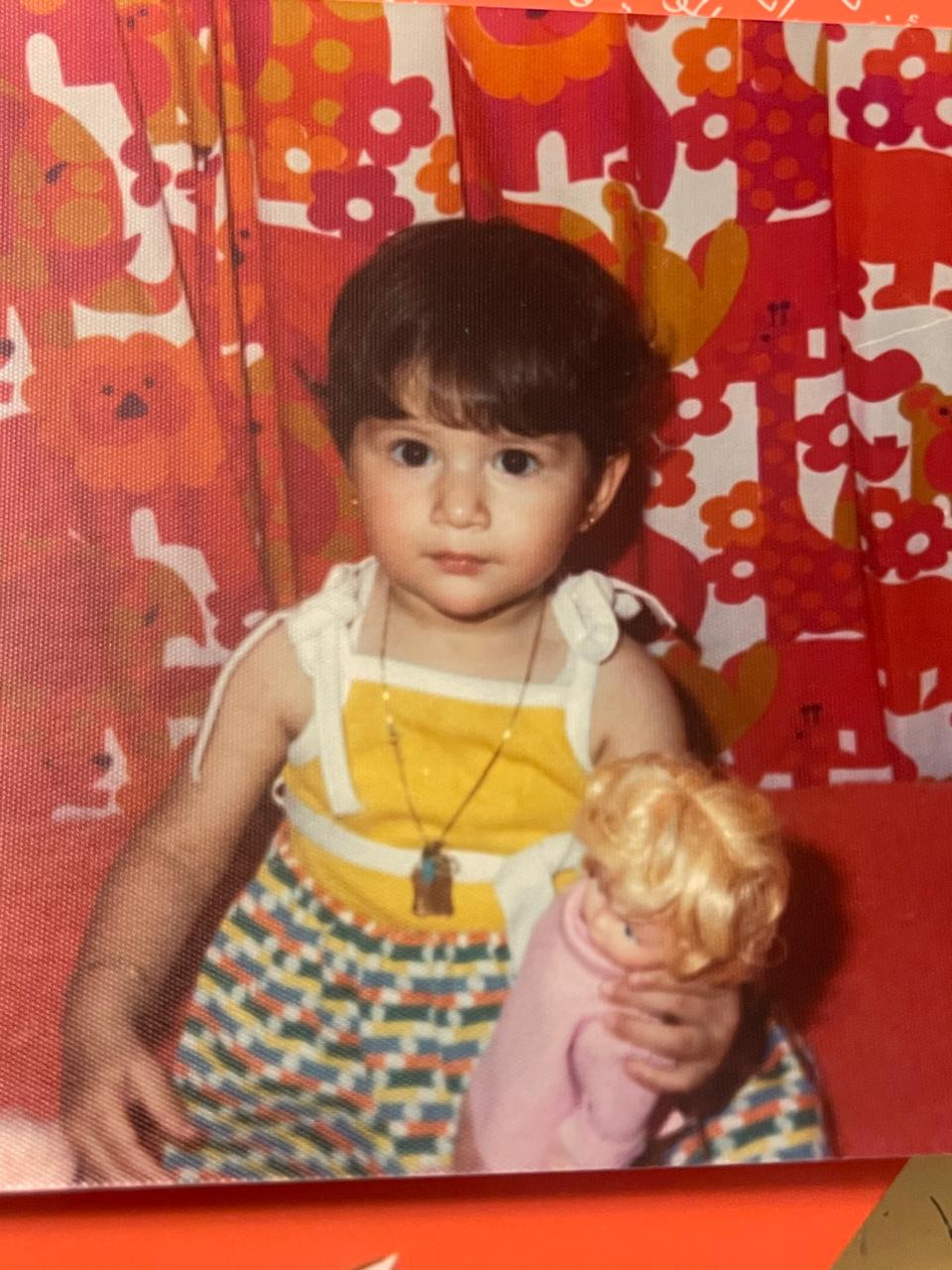
Before Zain Awad learned a single note, she had learned something far more important: that a home can be safe, quiet and free of violence — and at the same time full of art and life.
The talent came from the roots. Her grandfather's voice was often compared to Mohammed Abdel Wahab; her grandmother's to Laila Mourad. Inside the childhood home both parents loved music, and her mother had a beautiful voice she never sang with in public — but which she passed, indirectly, to her daughter.
Every Thursday the house turned into a small concert hall. Neighbours were welcomed; well-known singers such as Tawfiq Al-Nimri and Azar Habib visited, and their photographs are still kept in the family albums. The children — Zain among them — slept through those evenings because school came first, yet they absorbed the music from the next room.
More important than the music itself was the system of the house: calm, without punishment or raised voices, deliberately warm and playful. That climate, as Zain describes it herself, is what gave her deep self-confidence and the freedom to express herself from a very young age.
The mother who opened the door. When a music teacher was brought in to teach Zain's brothers the organ, Zain was not officially part of the lessons — she listened from a distance and reproduced by ear everything her brothers were taught. When her mother noticed, she asked the teacher directly: “Why don't you let her join? The girl is gifted and she is already playing what you teach her brothers.” From that moment the quiet eavesdropping became a recognised talent. Her mother also bought a musical instrument for the house in the 1970s — an unusual decision for that era — until the whole family played and sang.
Lesson: environment matters more than talent itself
- Talent alone is not enough. It is a seed that needs fertile soil. Zain's home was not a music academy — it was a safe environment that allowed experiment, failure and expression without fear.
- For parents: the greatest investment in your child is not necessarily a private tutor, but a safe space where the child can try, fail and express without being punished or mocked.
- The “eavesdropping” technique: Zain learned by observation, not by direct instruction. Watch the people around you, imitate in silence, then ask for your formal seat when you feel ready.
- For young people: don't wait to be told “go ahead, try.” Sometimes you must steal the learning first, prove your worth, and the official opportunity arrives on its own.
Chapter 02
The first ascent — when an opportunity turns into destiny

In the early 1990s Zain's voice began to “appear”, as she puts it, while she played and sang at small occasions. The first real opportunity came through the musical play Child of Peace (1992), attended by HRH Prince Hassan, which addressed children and world peace in several languages. Zain sang in the choir and silently wished she were the soloist — but that was not her role.
Then the unexpected happened: the lead singer fell ill and could not attend. Zain was suddenly asked to take her place. She stepped onto the stage of the Palace of Culture, sang solo, and proved herself in a performance described as outstanding.
Lesson: preparation creates luck
- The law: luck is the point where preparation meets opportunity. Zain did not get the role because she wished for it — she got it because, without planning, she already knew the part and was internally ready when the call came.
- Practical exercise: ask yourself now — “what role do I hope to be called to one day, and am I actually ready if it comes tomorrow?”
- For beginners: don't only master your announced role; quietly learn the roles around you. You never know when you will be asked to fill a gap.
- The principle of silent readiness: the greatest opportunities rarely arrive announced. They arrive as a sudden crisis — illness, absence, delay — that needs someone who is ready.
Chapter 03
From “I want to sing” to “why do I sing?”
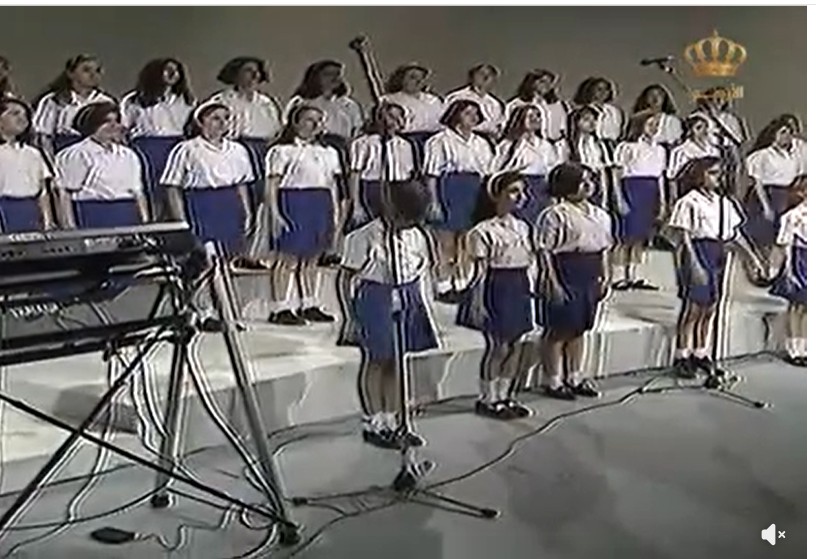
After the success of Child of Peace one question changed her thinking entirely: “Why don't you sing for the family as you sang for peace?” She recorded the only Arabic version of the Global Family Song, and her real awareness started to form.
She stopped to ask a deeper question: what is the difference between becoming famous and becoming documented? Fame can be manufactured in two days but is fragile; real impact comes from tying music to a human cause that stays in people's minds for decades.
From that moment she consciously sought subjects with human weight: the child, peace, the family, the environment, orphans, charity. It was not a slogan — it became a continuous artistic project, including a full children's album of her own lyrics and melodies produced with the international brand Hamleys.
Lesson: build a brand around value, not visibility
- Fame vs. reputation: attention can be bought quickly; a reputation is accumulated slowly and survives changes in fashion, platform and market.
- Anchor the craft in meaning. A skill that is not connected to meaning loses its appeal the moment difficulties appear.
- Ask the “why” early. The artists, managers and founders who last are the ones who can answer why they do the work, not only how.
Chapter 04
Two degrees at once — when a dream collides with the fear of those we love

As Zain approached the end of secondary school and wanted to study music at university, she met a real family obstacle. Her father — neither a musician nor a composer — was afraid for her and said frankly: “I'm scared for you; music doesn't put bread on the table.” He suggested Sharia or sports instead.
Zain chose neither of the expected paths: not full surrender to her father's wish, nor full rebellion against him. She invented a third option — studying two bachelor's degrees at the same time: music at the Jordan Academy of Music and physical education at the University of Jordan. It was exhausting, she commuted between two campuses and it took longer than usual, but she graduated with both: music in 2000 and physical education in 2003.
Remarkably, she never worked a single day in sports — yet she still carries a genuine passion for the field. The purpose of that second degree was never employment; it was to prove to her father that she could satisfy him and her own passion at the same time.
| Year | Institution | Degree |
|---|---|---|
| 2000 | Jordan Academy of Music | BA in Music (voice & piano) |
| 2003 | University of Jordan | BA in Physical Education |
Lesson: refuse the false binary
- Look for the third option. When two choices seem to exclude each other, the strongest answer is often a design that honours both.
- Cost matters. The third option is rarely the easy one — it cost her years and double effort. Choose it consciously, not romantically.
- Persuasion by proof. She did not argue with her father; she produced evidence.
Chapter 05
The crossroads — choosing family over the big lights
After winning first prize for best singer at the second Jordanian Song Festival with “Ya Dam'i Al-Murr”, Zain stood at a real crossroads: continue towards the large pan-Arab competitions such as The Voice and Super Star, or marry and build a family.
Her father, afraid again, did not agree to the big competitions: “Build a family and start from there — I cannot guarantee your safety.” Zain chose marriage — not as an escape from art, but because she saw in it real security and a foundation.
What is striking is the condition she set for herself and for her future husband before marriage: she was completely clear from the first day that she is a singer, that she will sing, and that he must not restrict her. She did not enter marriage hiding part of her identity in the hope of negotiating later — she entered it whole.
Lesson: clarity of terms before major commitments
- Priorities, not fear of missing out. Life-defining decisions are not built on the fear of a missed opportunity but on clarity of priorities. Zain never felt she “sacrificed” her dream, because she chose consciously and knew why.
- The “prior agreement” technique: before any large commitment — marriage, partnership, a new job — state your terms and boundaries from the very first moment. Early clarity prevents a far bigger collision later.
- For anyone who feels they must give up their identity for a relationship: giving up part of yourself is not a condition for love or stability.
Chapter 06
Motherhood and art — carving into rock

After marriage came a completely new stage: motherhood, with a responsibility she was not fully ready for. She describes the period with a powerful phrase: “I was carving into rock.” She was still young and, as she admits candidly, more occupied with herself and her career than she should have been — and yet she kept achieving while raising small children.
With time she realised that her family needed her again, and that her children — even after growing up — still needed her presence. So she made a conscious decision and took what she calls a “warrior's rest”, stepping partly out of the spotlight for her family, convinced that “if the family is not strong, I will not be strong.”
That withdrawal was not surrender. It came from a full awareness that a mother, however accomplished, remains a mother first — and that the family is the base any other success stands on. The most beautiful part: her children saw their mother happy while pursuing her passion, and that itself was a life lesson that needed no words.
Lesson: a pause is not always a failure
- A deliberate step back is a strategy, not a defeat — as long as it is a conscious decision rather than a loss of identity.
- Role balancing: managing simultaneous identities without permanently abandoning any of them is a measurable managerial skill, not a personal weakness.
- Model, don't lecture. Children learn ambition by watching it lived, not by being told about it.
Chapter 07
Expatriation — starting from zero with courage
Later, family circumstances moved Zain and her family to Abu Dhabi in the United Arab Emirates because of her husband's work. The moment was full of real fear — not of living abroad, but of the idea that after building her name in Jordan over many years she would have to start from zero in a completely new environment.
What actually happened was very different. The four and a half years abroad — commuting between Jordan and the Emirates — became a period in which she came to know herself more deeply and excelled on every level. She was invited to perform alongside the great Samira Tawfiq, and sang at the ceremony honouring King Abdullah II with the Templeton Prize in Washington in 2017.
It took her almost two full years to discover the new artistic format that suited the Emirati environment: singing and playing piano at private occasions and weddings — a form very different from what she was used to in Jordan. Later her husband had to return to Jordan just as she had rebuilt her name abroad; her mother needed her, and after her father passed away she returned to be close to her.
| Station | Details | Significance |
|---|---|---|
| Relocation | Abu Dhabi, UAE — about 4.5 years | Starting from zero with courage |
| Rebuilding | Two years to find a new artistic format | Redesigning delivery, keeping the core |
| Return | Back to Amman for family reasons | Career decisions inside a life system |
Lesson: don't be afraid to reinvent yourself
- Professional capital does not always travel. Relationships, audience, reputation and market knowledge often have to be rebuilt in a new geography.
- Keep the essence, redesign the delivery. Changing markets does not require abandoning experience — only reformatting how it is presented.
- Give reinvention a realistic timeline. Two years is a normal cost, not a sign of failure.
Chapter 08
From “Zain the singer” to “Rajaa” — the courage to expand

During the same years abroad, and with the early spread of Snapchat, Zain discovered a talent she did not know she had: comedy and acting. She created an entirely new character on Instagram called Rajaa — spontaneous, cheerful and light-hearted, radically different from the formal image of “Zain the singer” the audience had known for decades.
The character gave her a freedom she never had before: expressing her ideas in a completely different register, far from the formality of the concert stage. Through Rajaa she sometimes carried light religious or educational messages, without the audience feeling the weight of direct advice.
Through that character new acting opportunities arrived that her traditional singing path would never have produced — among them a Ramadan drama with the actor Emad Farajin, an experience she describes as new for her and perhaps strange for part of an audience used to seeing her only as a singer.
Lesson: don't lock yourself inside one identity
- “Zain the singer” did not cancel “Rajaa” — she added her. Success is not clinging to one box; it is expanding with confidence.
- Social platforms as a safe testing space: instead of waiting for a formal acting opportunity that may never come, she built her own stage first — and the official offers followed as a natural result.
- The “light message” technique: deep messages reach people more effectively when delivered with humour and lightness than through direct preaching.
- For anyone who feels trapped: discovering a new talent mid-career is not late — it is evidence that a living person never stops developing.
Chapter 09
On the highest stages — when discipline becomes a daily habit
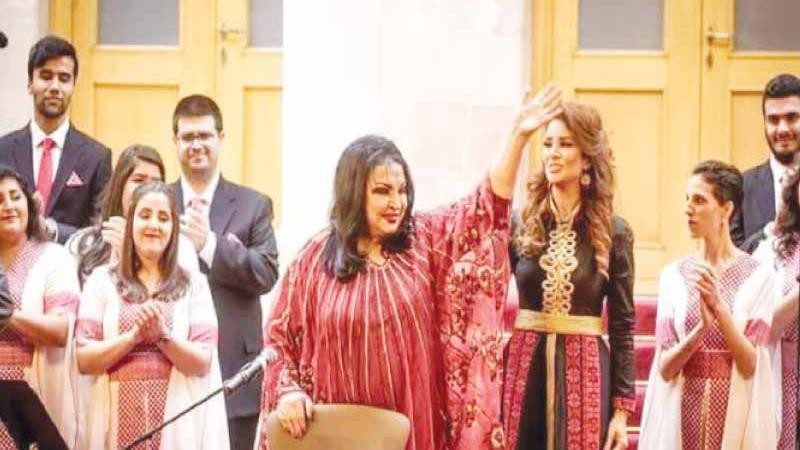
Zain's major stations were not the product of chance but of long years of discipline, continuity and constant presence in the artistic and cultural scene.
Singing before the King. She sang before His Majesty King Abdullah II on several Independence Day occasions, most notably the 71st Independence celebrations, alongside the great Samira Tawfiq — “the brunette of the desert” — who granted her the rare personal honour of singing from her complete artistic archive. Zain's voice belongs in feeling to the school of Warda Al-Jazairia, and in that moment two different schools of singing met on one stage, before the King — a reminder that real art knows no rigid moulds.
- Templeton tribute, Washington (2017) — sang at the ceremony honouring King Abdullah II with one of the world's most prestigious awards.
- TEDx Summit, Qatar — performed in four different languages with live playing, an exceptional linguistic and musical feat.
- UNESCO, Paris (2021) — represented Jordan at a ceremony held by the Jordanian embassy to UNESCO.
- Maestro Riccardo Muti (2023) — joined an exceptional orchestral tour representing Jordan in Ravenna and Pompeii in Italy, and in Jerash.
- “La Moustahila” / Hope Makers operetta (2020) — the only Jordanian artist in the collective work composed by RedOne and recorded in Dubai.
- Tolerance Day, Abu Dhabi (2018) — performed with the Ministry of Tolerance.
- Royal henna celebration of HRH Crown Prince Al Hussein bin Abdullah II.
- Nominated to play Warda Al-Jazairia in the film Maddah Al-Qamar, reflecting the striking similarity of the two voices.
- “Ibn Biladi” (2024) — a collective Jordanian patriotic work with a group of national artists.
Lesson: awards are a result, never a target
- Awards were never the engine of Zain's work; they arrived as the natural consequence of continuous, sincere effort.
- In any creative or professional field, don't let the next award be your only measure of success. Ask instead: “am I still delivering something of value?”
Chapter 10
Awards and honours — recognition that came after the effort
Across her career Zain collected a series of awards and honours divided between direct artistic recognition and popular and media appreciation — each one arriving after, not before, the work.
| Award | Body | Year |
|---|---|---|
| Best rising female singer | Jordan Awards — first edition | — |
| First prize — “Ya Dam'i Al-Murr” | Second Jordanian Song Festival | 2003 |
| Second prize — “Sabah Al-Khair Ya Insan” | Arab States Broadcasting Union Festival (Egypt) | — |
| Best Jordanian female singer — “Ya Tara Tehwani” | Taiki Awards, Jordan | 2010 |
| Best Jordanian female singer | Jordan Awards Festival | 2011 |
Chapter 11
Reviving Warda — when success becomes a way of honouring others
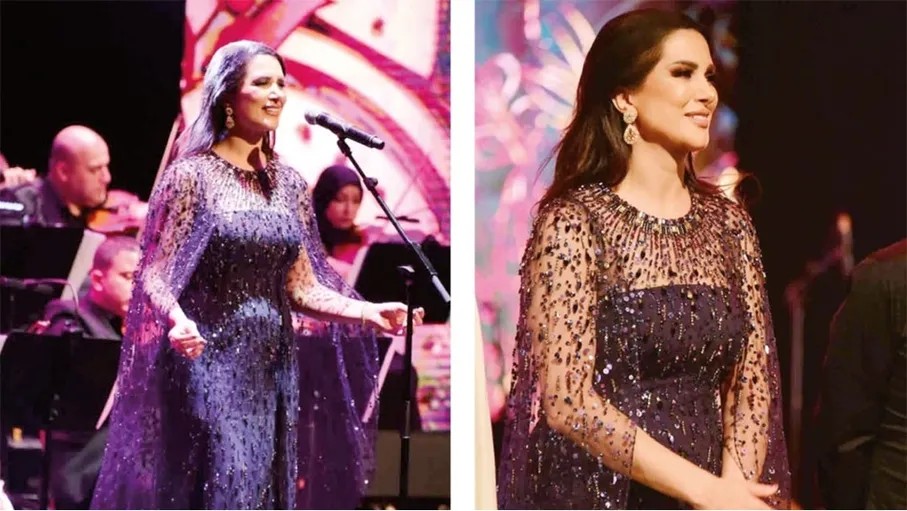
One of the most moving stations of her career began with a completely accidental meeting. Through a mutual friend, at a dentist's clinic, Zain met the wife of Riad Kosseri — son of the late Algerian legend Warda Al-Jazairia. The family heard Zain's voice and were astonished by how closely it resembled Warda's own. When Riad Kosseri, then in Algeria, heard the resemblance, he was equally struck.
From that chance encounter came the idea of a full evening commemorating Warda Al-Jazairia, which Zain staged at the Al-Hussein Cultural Centre in Amman around 2013–2014. She invited journalists, media figures and well-known composers from Egypt such as Jamal Fayyad, Salah Al-Sharnouby and Bilal Al-Zein. The evening presented Warda's masterpieces with total fidelity to the original text plus a personal creative touch.
It did not stop there: Zain was later officially invited to sing in commemoration of Warda in Algeria itself, this time under the personal supervision of Warda's son.
Lesson: turn success into value beyond yourself
- Professional standing becomes far more sustainable when it shifts from self-building to adding value to the field you belong to.
- Honouring the legacy of those who came before you is part of building a professional reputation, not a side activity.
Chapter 12
From the stage to the microphone — expanding beyond the original specialty
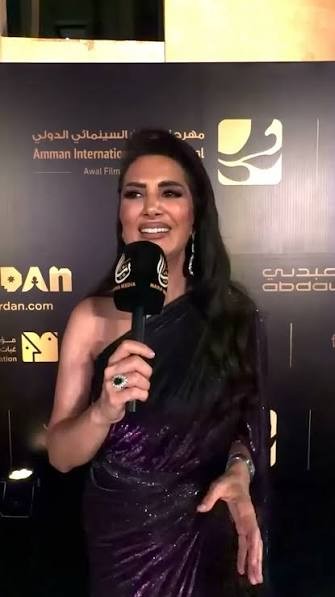
In recent years the Royal Film Commission of Jordan chose Zain Awad to host the international film festival for seven consecutive years, including exceptionally difficult periods such as the COVID-19 pandemic and the war in Gaza. The organisers liked her style and presence so much that they kept choosing her year after year.
It did not begin with that festival. The Royal Hashemite Court had earlier selected her to host the Independence Day celebration at the Amman Citadel during the pandemic, having noticed her continuous activity across singing, hosting and comedy at once. From that first choice, further hosting invitations followed.
She describes the move from “the singer standing on stage” to “the host who runs the stage” as strange at first, but also a great honour. Her belief is simple and strong: “Why not? Why shouldn't a person offer more than what is expected of them? If they can — they can.”
Lesson: accumulated skills open unexpected doors
- The rule: Zain never planned to host international festivals. The accumulation of different skills — singing, strong stage presence, comedy, discipline under exceptional pressure — is what nominated her for an entirely new role.
- The “side doors” technique: the road to an opportunity is often indirect, passing through a skill you developed on the margins without intending it.
- For anyone who feels boxed in by their specialty: keep developing every skill that interests you, even the ones far from your core field — one of them may be the bridge.
Chapter 13
Zain's philosophy of success — passion changes, but it must stay alive
Looking back at her whole journey, Zain reaches a simple but deep conclusion: a person must develop themselves every day, and their passion may shift and change over time — but there must always be some passion present, alive and renewed.
She admits frankly that her first passion, the stage, “comes and goes” depending on circumstances, because life does not always move in a straight line. What matters is that the flame never goes out entirely.
Management frameworks visible in the case
Family Capital
A supportive family environment as the foundation of every later success.
Preparedness Meets Opportunity
The sudden solo in *Child of Peace*, 1992.
Purpose-Driven Branding
The shift from “I want to sing” to “why do I sing?”
Role Balancing
Managing motherhood alongside a continuing artistic career.
Self-Reinvention
The expatriation years and the creation of the character “Rajaa”.
Portfolio Career
Singing, composing, comedy, acting and festival hosting as one integrated system.
Nine transferable lessons
Lesson 01
Learn before you ask for the opportunity
Observation is not a passive stance. You can learn a great deal by watching experienced people before you receive the formal role — and observation becomes valuable the moment it turns into real readiness.
Lesson 02
Prepare for the opportunity before it arrives
Ask yourself: what role do I hope to be called to one day, and am I ready if it comes tomorrow? If the answer is no, the best time to prepare is now.
Lesson 03
Tie your work to meaning
A skill without meaning loses its appeal when difficulties appear. When a person feels their work serves a value larger than themselves, their capacity to continue grows.
Lesson 04
Don't accept binaries too quickly
When two options seem to conflict, do not assume you must pick one and abandon the other. Look for the third option.
Lesson 05
Clarify expectations before committing
Whether it is a job, a partnership, a project or a professional relationship, clarity at the beginning reduces the probability of collision later.
Lesson 06
Stopping is not always failure
There are stages in life that require a temporary retreat from one field in order to invest in another. What matters is that the retreat is a conscious decision, not a loss of identity.
Lesson 07
Don't fear reinventing yourself
A change of market does not mean abandoning previous experience. Keep the essence and redesign the way it is delivered.
Lesson 08
Develop “side doors”
The skill you develop today outside your core specialty may be the one that opens a major opportunity tomorrow. Diversification is not distraction when it serves the core professional identity.
Lesson 09
Build reputation before image
Image attracts attention, but value builds continuity. Quality of work, commitment and real value must precede the focus on visibility.
Academic value of the case
- Career management — how to manage professional transitions, temporary interruptions and rebuilding a path after geographic relocation.
- Leadership — personal initiative, readiness, and decision-making under social pressure.
- Marketing & personal branding — the shift from building fame to building an identity grounded in value and continuity.
- Creative entrepreneurship — the portfolio career model, and how a talented individual turns a set of different abilities into one integrated professional system.
- Women and work studies — the relationship between professional ambition, family, motherhood, the social environment and the management of multiple roles.
Discussion questions
- 01How did the family environment shape Zain Awad's self-confidence from childhood, and what is the general educational implication of this factor?
- 02Analyse the *Child of Peace* episode using the principle “preparedness meets opportunity.” How can you apply it in your current academic or professional path?
- 03What is the difference between fame and a personal brand, and how does that difference appear in Zain Awad's experience?
- 04Discuss the concept of the “third option” in her experience. How could it be applied to a contemporary professional or personal situation?
- 05How can the motherhood stage be interpreted through the lens of managing multiple roles?
- 06Can the “warrior's rest” be considered a professional strategy? Discuss with reference to the case.
- 07What challenges may a person face when moving to a new market or geography, and how did Zain Awad deal with them?
- 08Does her move into hosting, acting and comedy represent professional distraction or the construction of a portfolio career? Justify your answer.
- 09What is the most important sector gap this case reveals in the Arab creative industries?
- 10In your view, what is the single most influential element in the sustainability of her career? Support your answer with examples from the case.
- 11If you were a career advisor to Zain Awad at one stage of her journey, what strategy would you have proposed, and why?
- 12What is the most transferable lesson from this case to a university student's life or professional path?
Zain Awad's story is not only the end of a long artistic journey. It is a study in continuity, resilience, professional identity, and the human capacity to turn transitions into new opportunities for growth.
There was a little girl who fell asleep every Thursday night to the sound of music — and that girl grew up to sing before the King, because she never once stopped loving what she does.
Back to all case studies